
How Much Does a Drone Roof Inspection Cost in the UK?
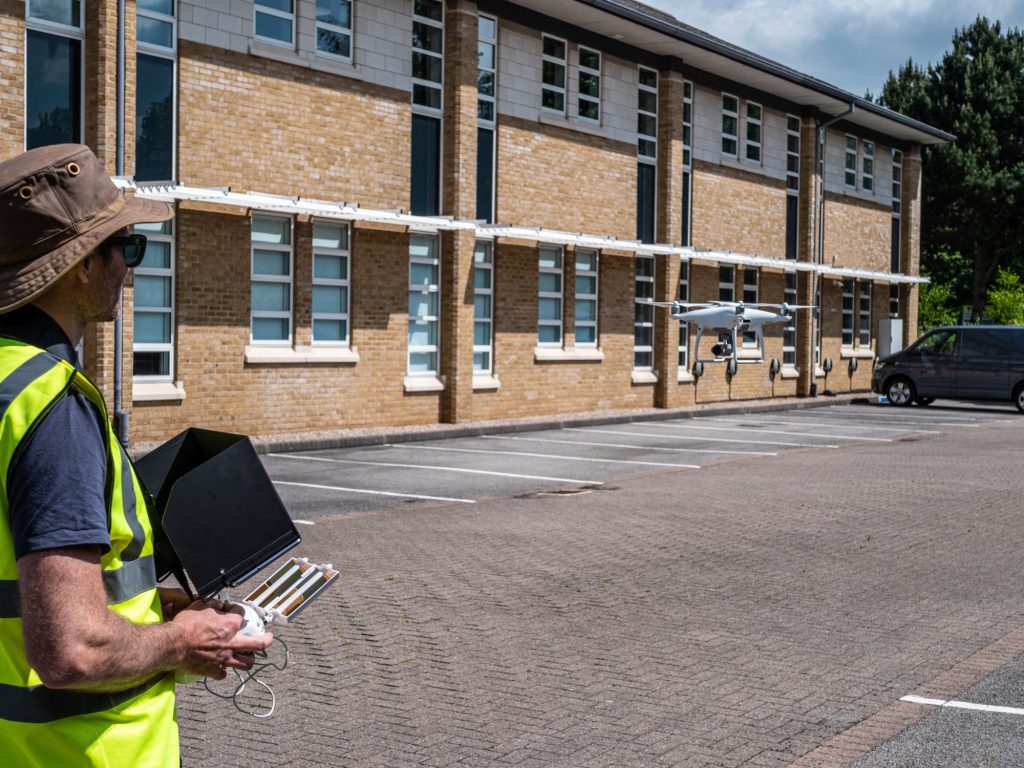
Drone roof inspections are now a common way to assess the condition of a roof without scaffolding, ladders, or physically accessing the roof surface. They are used across the UK by homeowners, property and block managers, commercial property owners, and insurers as a safe and efficient first step when roof issues are suspected.
This page explains what affects the cost of a drone roof inspection, why prices vary, and how to interpret quotes you may receive.
In practice, the terms “drone roof inspection” and “drone roof survey” are often used interchangeably. In this article, both refer to the same non-intrusive visual assessment carried out using a drone.
If you are looking to commission a professional survey rather than understand pricing factors, full service details are covered here: Drone Roof Surveys.
Typical cost of a drone roof inspection in the UK
In the UK, a drone roof inspection typically costs from around £200 to £500 or more, depending on the property and the scope of the inspection.
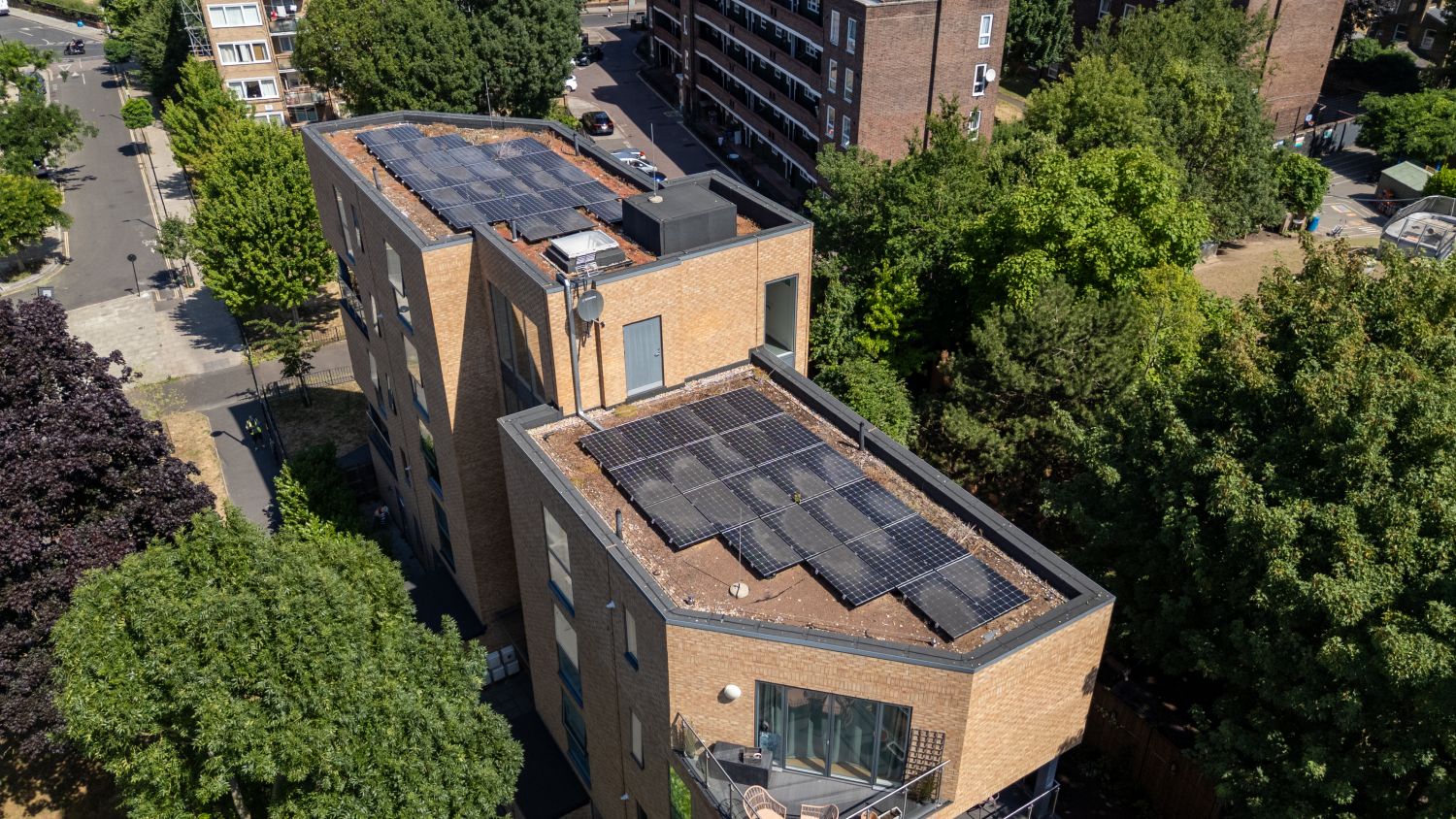
Lower-cost inspections are usually suitable for smaller residential properties with simple roof layouts, clear access, and limited detailing. More expensive inspections are normally associated with larger or more complex roofs, and buildings with multiple roof areas.
The same drone and pilot can inspect two properties on the same day, yet one inspection may take 15 minutes and the other well over an hour. The difference in cost reflects that reality.
How drone roof inspection costs are calculated
In most cases, the cost of a drone roof inspection is determined before attending site, based on a desk-based assessment.
The process usually starts with the client providing the property address and a brief description of the building. This might be as simple as noting that it is a three-bedroom terraced house, a block of flats, or a commercial building.
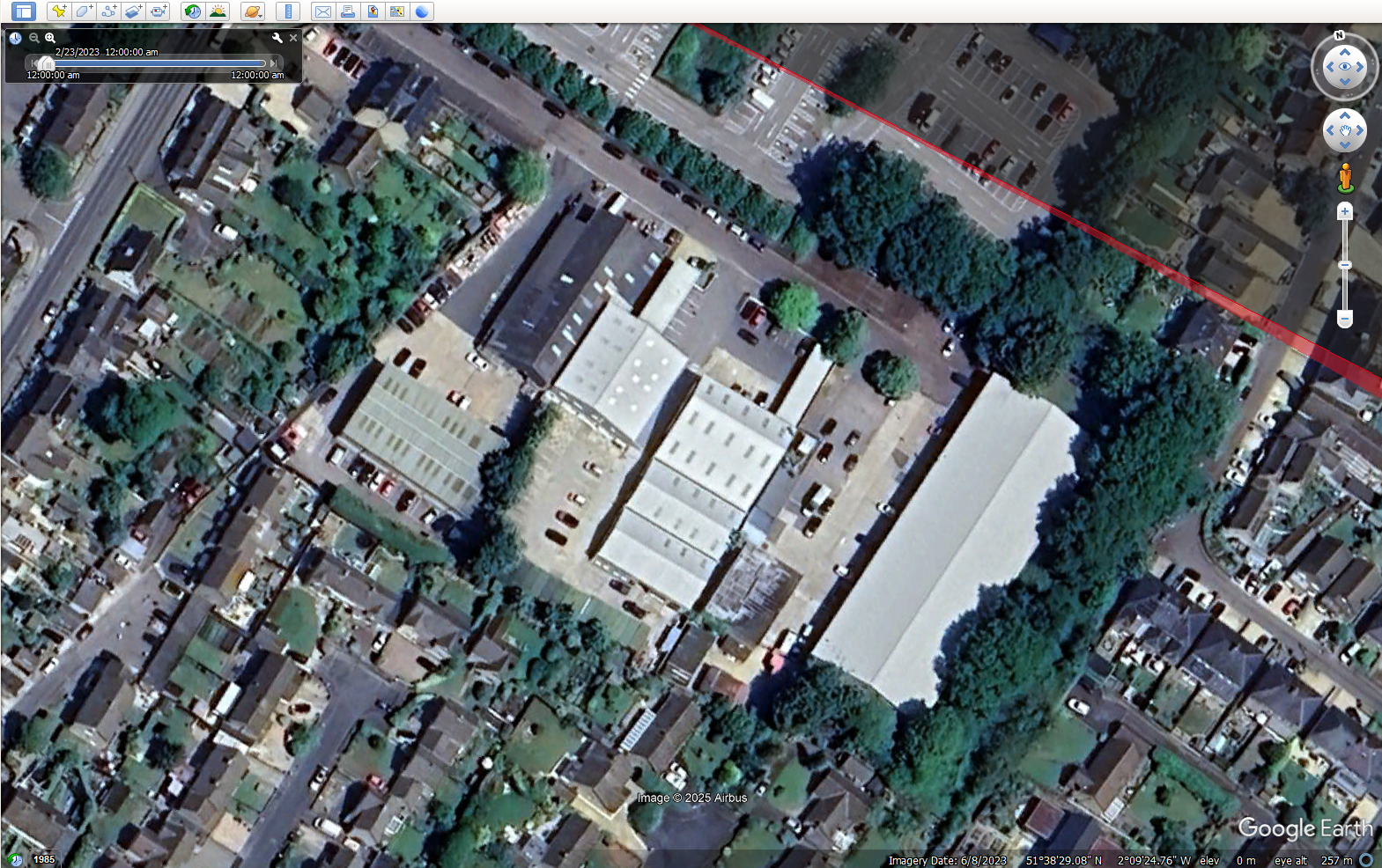
Using this information, the roof is reviewed remotely using tools such as Google Street View and satellite imagery. This allows the overall roof layout, footprint, and visible detailing to be assessed in advance. Features such as extensions, changes in roof direction, chimneys, dormers, parapets, rooflights, and surrounding constraints can often be identified at this stage.
Based on this assessment, a fixed quote is issued to the client. This approach avoids uncertainty on the day and ensures the price reflects the likely time and complexity involved rather than a generic estimate.
While no remote review can replace being on site, this process is usually reliable and allows inspections to be planned properly.
Why roof complexity affects inspection cost more than size
Roof size is a factor, but it is rarely the most important one.
The biggest driver of inspection time is roof complexity, particularly the number of junctions, penetrations, and changes in direction. Roofs with multiple chimneys, dormers, extensions added over time, intersecting roof planes, valleys, hips, parapets, and extensive flashing all require closer inspection.
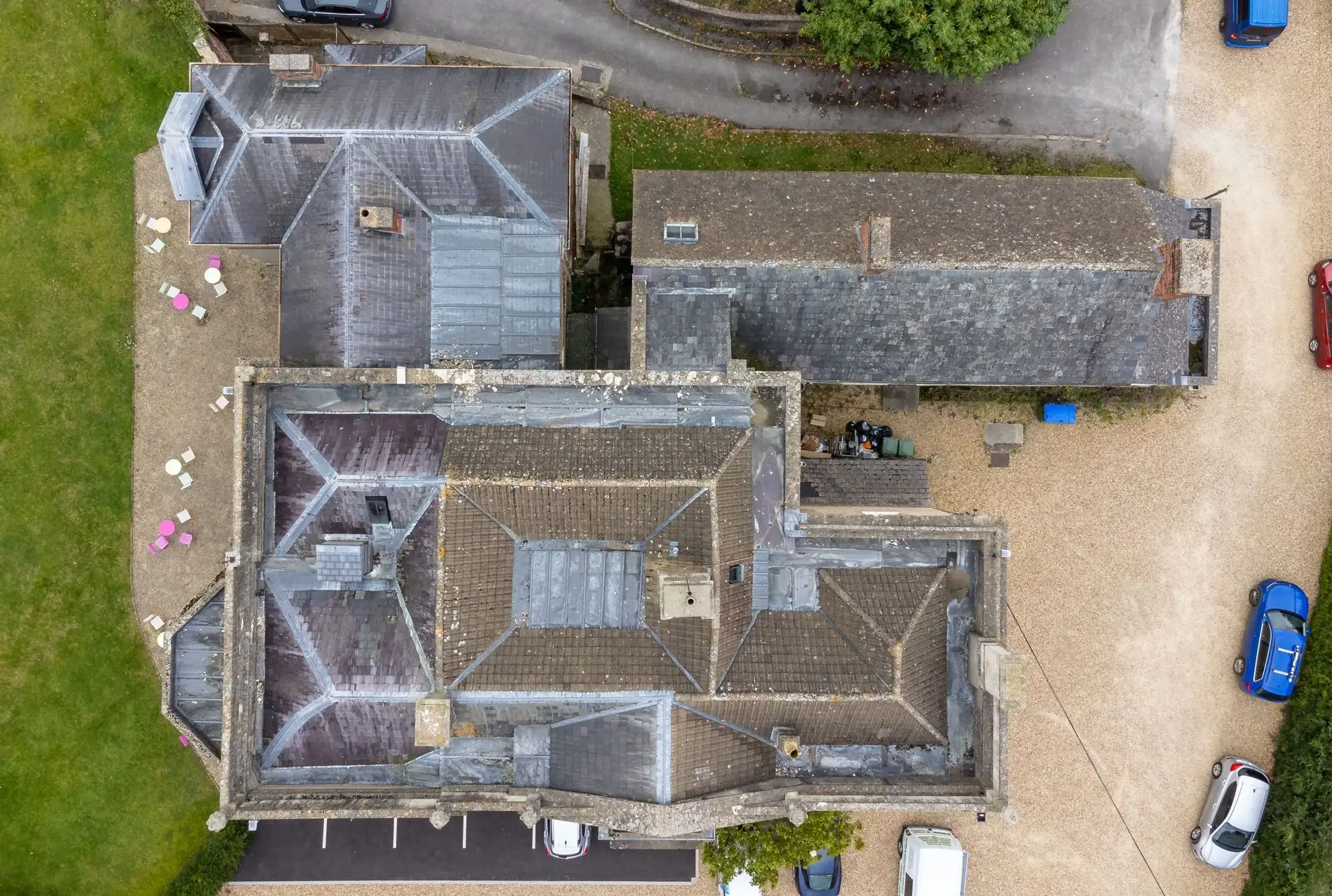
Each junction or penetration is a common point of failure and needs to be viewed from several angles. This means slower flight speeds, more careful positioning of the drone, and a greater number of images to allow proper review afterwards.
By contrast, some roofs that appear complex at first glance can be relatively efficient to inspect if the construction is consistent and interruptions are limited.
How roof age, alterations, and existing condition affect cost
The age of a building and the way its roof has evolved over time can have a major impact on how long a drone roof inspection takes, and therefore what it costs.
A relatively modern building with a consistent roof structure and uniform coverings is often quicker to inspect. This is particularly true where there have been no additions added over time and the roof geometry remains simple and predictable. When materials, junctions, and drainage details are consistent across the roof, it is usually possible to achieve full coverage efficiently and review the imagery quickly because there are fewer unusual interfaces or one-off details that need extra attention.
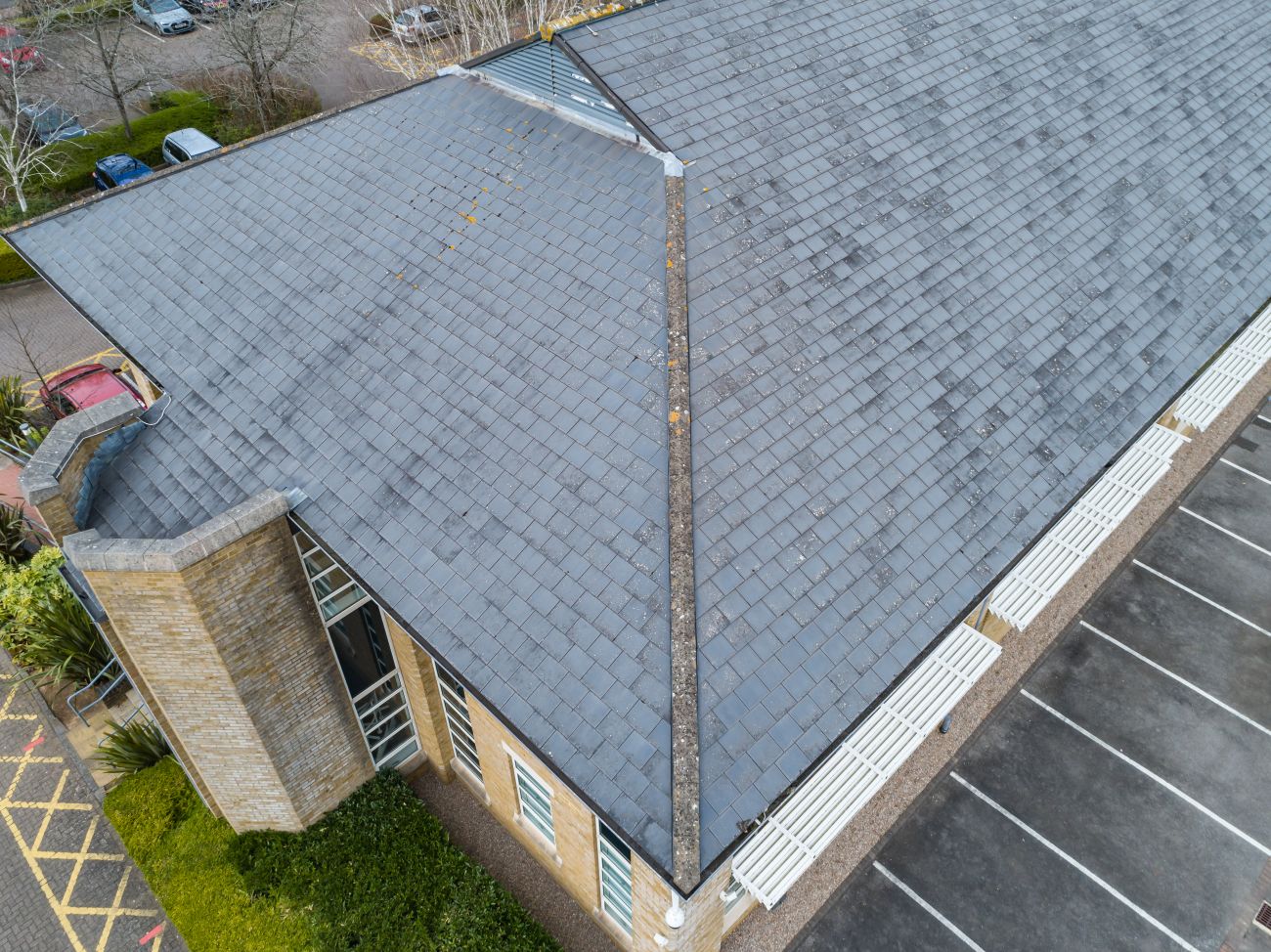
Older buildings, or buildings that have been altered repeatedly, often take longer. Over time it is common to see extensions, partial re-roofing, changes in materials, and patch repairs. These changes create more junctions and interfaces, and those are the areas where defects and water ingress are most likely to occur. Even if the roof is not particularly large, a roof with mixed coverings and multiple construction phases usually requires more images from more angles, and more time spent reviewing details to understand what is original and what has been altered.
Existing roof condition also matters. A roof that appears well maintained, with limited visible defects, is normally faster to assess because the inspection can focus on confirming general condition and recording any isolated issues. A roof that is poorly maintained, or where defects are numerous, typically requires more time because each defect needs to be captured clearly, checked from multiple viewpoints where necessary, and documented carefully. This is especially relevant where the inspection is intended to support maintenance planning, professional review, or insurance discussions, where the output needs to be clear enough that other parties can rely on it as a visual record.
This is one of the main reasons why two properties that look similar in size can be priced differently. A newer, consistent roof in good condition will often be quicker to inspect than an older or heavily altered roof where condition varies across the building and defects need more detailed documentation.
How access and site constraints influence inspection pricing
Although drones remove the need for scaffolding or ladders, they do not remove the need for careful planning.
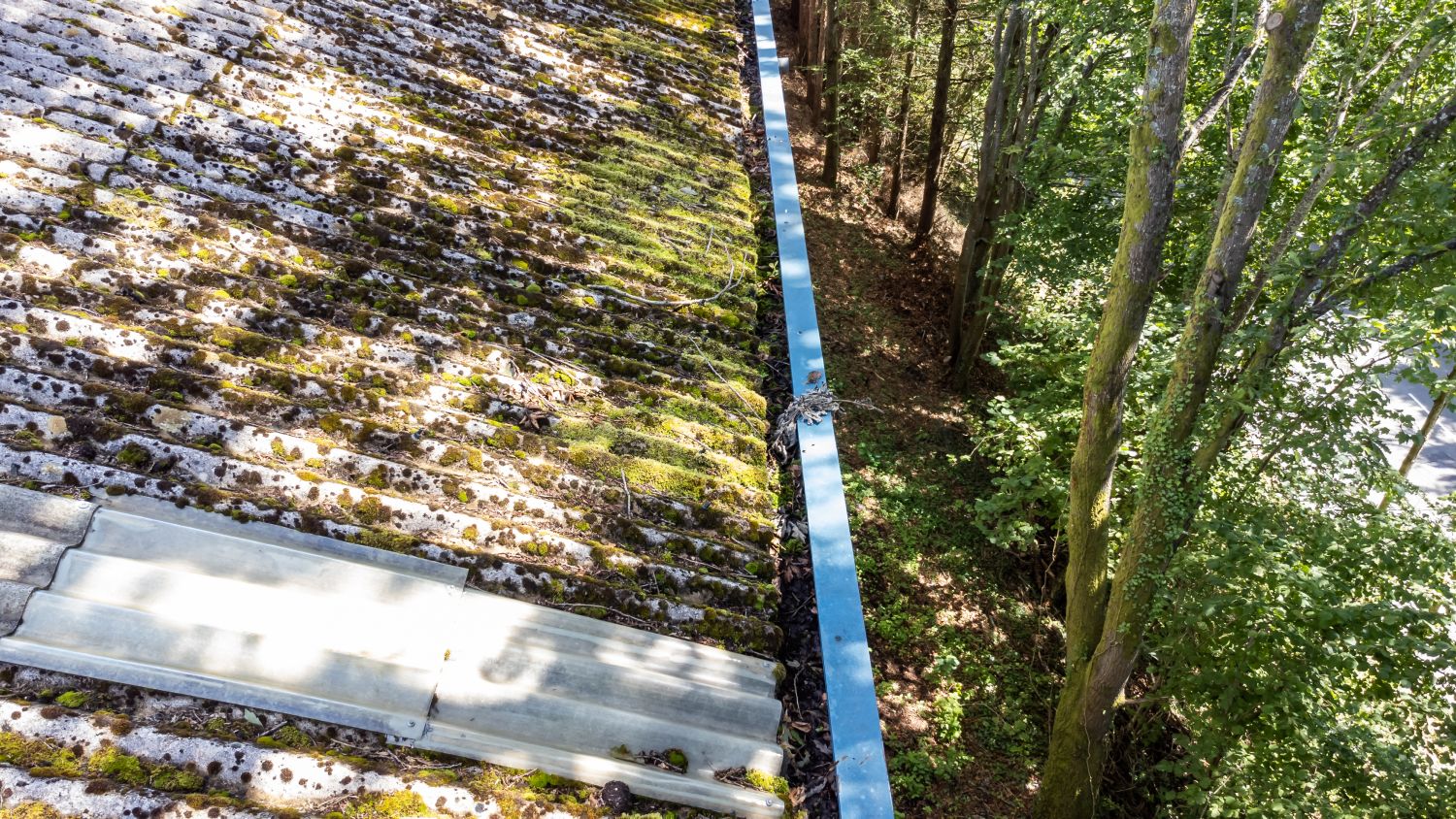
Trees, neighbouring buildings, enclosed courtyards, and restricted rear access can all affect how an inspection is carried out. In some cases, additional time is needed to achieve full coverage safely, particularly where visibility is limited or flight paths are constrained.
These factors are usually considered during the desk-based assessment and reflected in the quote.
How different property types and buyers influence inspection cost
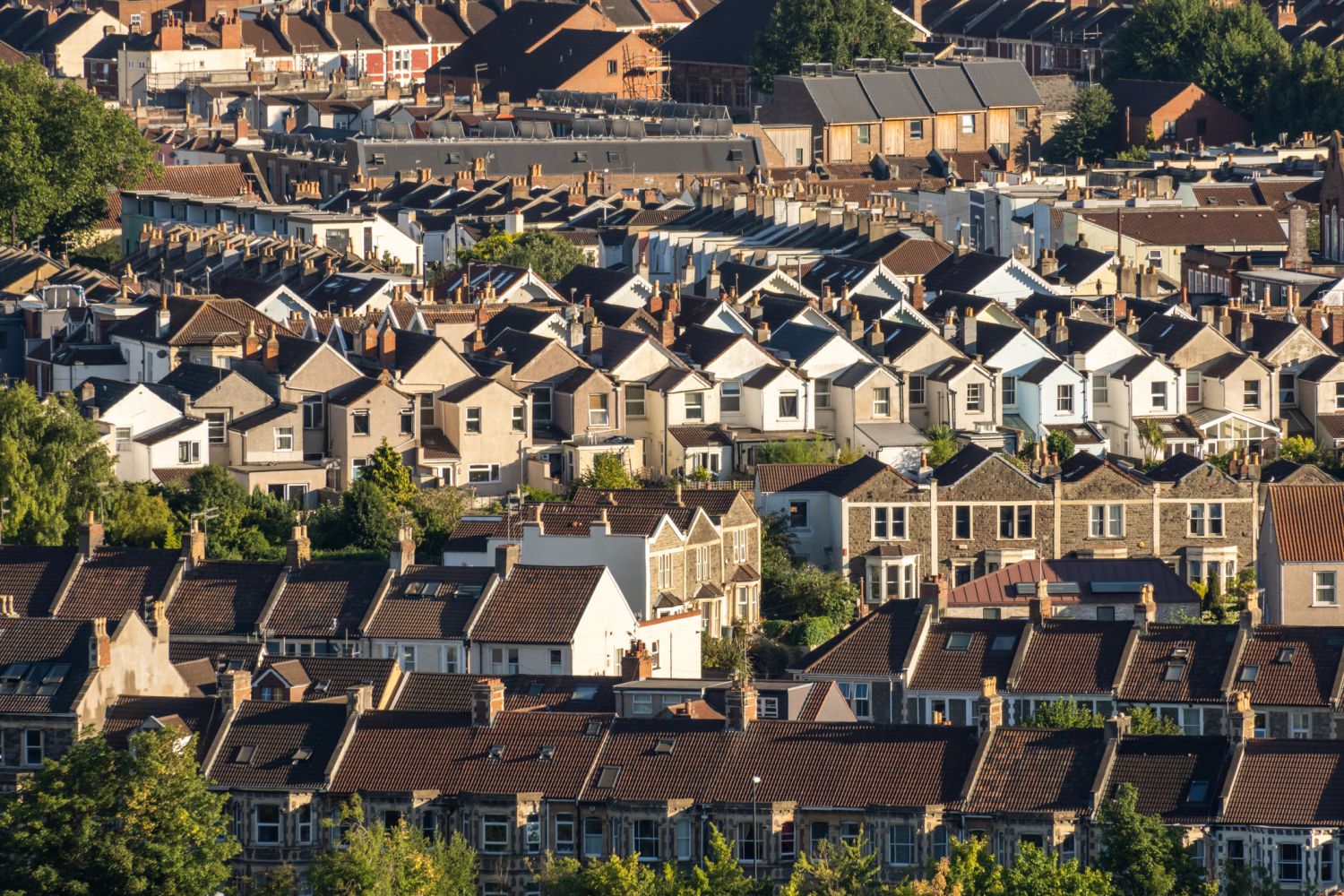
Although the same inspection method may be used, the reason for commissioning a drone roof inspection and how the results are used varies significantly between buyers. This directly affects the time required and, in turn, the cost.
Typical drone roof inspection costs by property type
The examples below illustrate typical drone roof inspection costs. Actual prices vary depending on the specific building and inspection requirements.
Residential houses
For a typical modern 2-4 bedroom house with a conventional pitched roof, a drone roof inspection generally costs from £195 + VAT.
These inspections are commonly used to investigate leaks, assess overall roof condition, or provide imagery prior to maintenance or repair work.
Blocks of flats and apartment buildings
Drone roof inspection costs for blocks of flats and apartment buildings typically start from £300 + VAT, depending on roof size, height, layout, and overall complexity.
These inspections are commonly commissioned by:
- block and property management companies
- managing agents
- housing associations
- freeholders and asset managers
For multi-occupancy buildings, drone roof inspections are often used to:
- assess the overall condition of flat or pitched roof coverings
- identify defects affecting multiple dwellings
- investigate persistent leaks or water ingress
- support planned maintenance and budget forecasting
- provide visual evidence for insurers or leaseholder communication
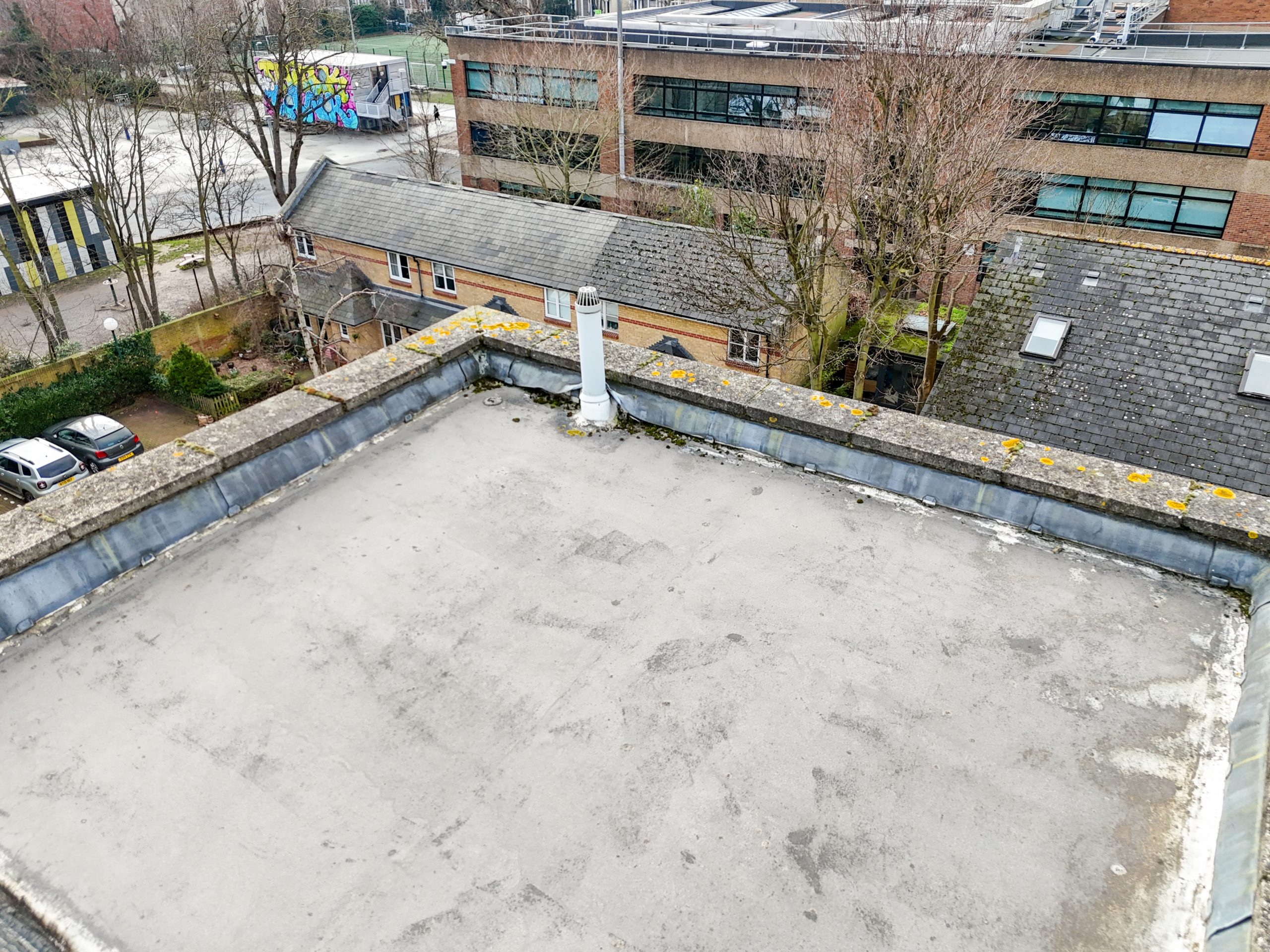
Features such as flat roofs, parapet walls, coping stones, hoppers, and internal rainwater outlets are common on apartment buildings and can influence inspection time and cost. Larger footprints, multiple roof levels, or restricted access around the building will generally increase survey complexity.
Because scaffolding or access equipment can be disruptive and expensive on occupied buildings, drone roof inspections are frequently chosen as a cost-effective, low-disruption alternative for blocks of flats.
Commercial buildings
Drone roof inspection costs for commercial buildings such as offices, retail units, and mixed-use properties typically start from around £300 + VAT, with pricing varying based on roof size, layout, and access constraints.

Commercial roof inspections are often required for:
- routine condition assessments
- planned maintenance and lifecycle planning
- lease handover or acquisition due diligence
- insurance reporting or claims support
Commercial roofs commonly include flat roof membranes, rooflights, plant equipment, parapet walls, and complex drainage layouts. These elements require closer inspection and additional imagery, increasing both flight time and post-inspection review.
Drone roof inspections allow commercial property stakeholders to obtain detailed visual records of roof condition without disrupting building occupants or trading activity.
Warehouses and industrial buildings
Drone roof inspection costs for warehouses and industrial buildings typically start from around £300 + VAT, but can vary significantly depending on the size and complexity of the structure.
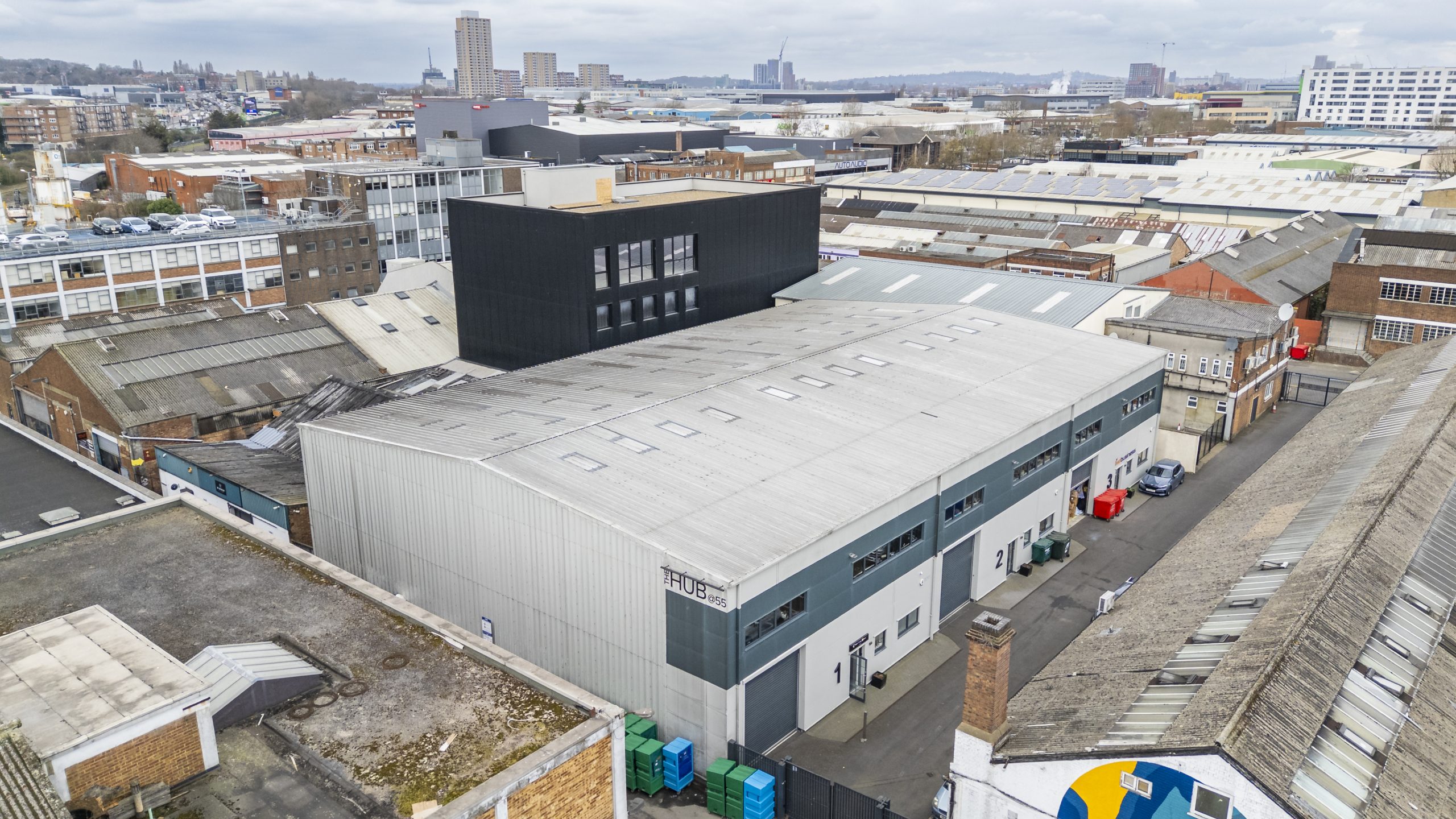
Industrial roofs often cover very large areas and may include:
- extensive flat roof systems
- roof-mounted plant, HVAC units, or solar installations
- complex drainage layouts
- multiple roof sections or expansion joints
These buildings are frequently inspected to identify water ingress, ponding on flat roofs, or deterioration of roof coverings. Because traditional access methods on large industrial roofs can be costly and time-consuming, drone roof inspections are often used as a practical first-stage assessment before committing to more invasive investigations or remedial works.
Why inspection purpose affects cost
Although the drone, pilot, and safety considerations may be similar, the intended use of the inspection affects how much of the roof needs to be covered, how many images are required, how much time is spent reviewing imagery, and how the findings need to be presented.
This is why two inspections that appear similar on paper can be priced differently. The difference is rarely the flight alone. It is the level of detail, interpretation, and documentation needed to make the inspection genuinely useful for the person commissioning it.
Why drone roof inspection quotes can vary
It is common to see significant differences between quotes for what appears to be the same service.
This is often due to differences in how much time is spent capturing imagery, how thoroughly images are reviewed afterwards, and whether the inspection includes a written condition report. A lower quote may reflect a shorter site visit or minimal post-processing rather than a different inspection method.
Understanding what is included helps make quotes easier to compare.
What drone roof inspections can and cannot identify
Drone roof inspections are non-intrusive visual surveys. They assess what can be seen without lifting materials or carrying out physical testing.
They are particularly effective at identifying visible defects such as displaced coverings, deteriorated flashings, issues at junctions and penetrations, and problems with drainage that are difficult or unsafe to assess from ground level.
However, roof defects and leaks do not always behave in simple ways.
Water does not always enter the building directly above where it appears internally. It can track along membranes, felt layers, or structural elements, sometimes travelling some distance before becoming visible inside. Intermittent leaks may only occur under specific weather conditions.
A drone survey can often identify likely points of entry, but it cannot confirm the full internal path of water movement where this occurs beneath coverings or within concealed construction.