
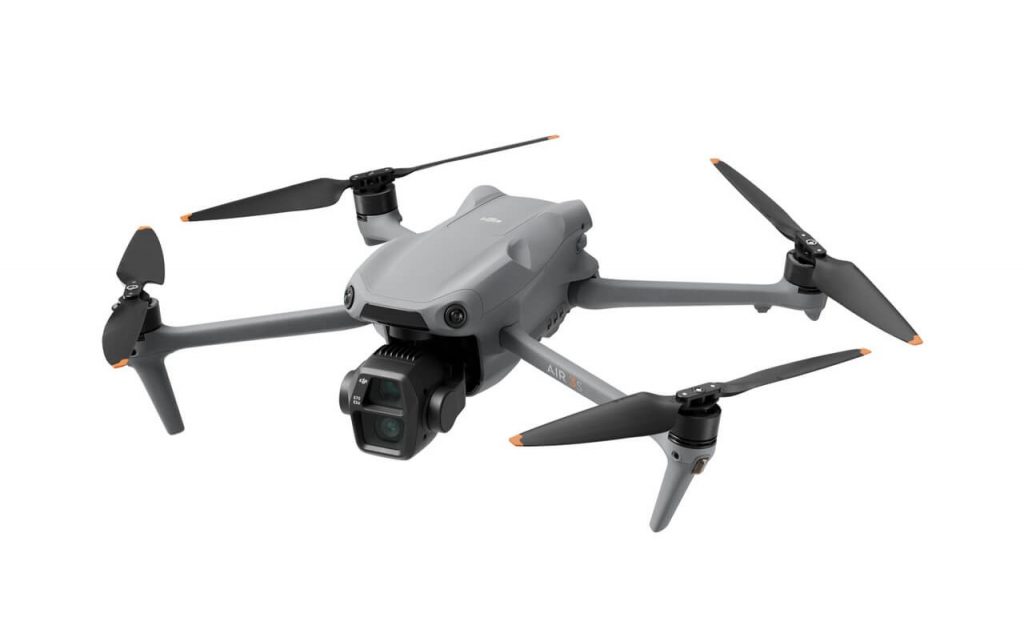
Most “best drone for roof inspections” guides are written by people who have never actually done one. They list specs from a manufacturer’s website, arrange them in a table, and call it a day.
This guide is different. I’ve been flying commercial roof inspections for years, covering residential properties, industrial facilities and commercial buildings, including jobs launched from busy London high streets where the wrong drone choice could create a serious safety risk. What follows is based on real operational experience, not spec sheets.
The short answer to which drone is best: it depends where you’re flying and what you need to see. The longer answer is below.
What Actually Matters for Roof Inspections (That Most Buyers Overlook)
Before getting into specific drones, there’s something that matters more than any spec: your knowledge of the UK drone regulations and how they apply to each weight class in each environment.
Most people researching this question are focused on camera quality. Camera quality matters, but it’s the second consideration. The first is whether you can legally and safely fly a given drone at the location where the inspection needs to happen.
The UK CAA categorises drones by weight, and those weight categories dictate where you can fly, how close you can fly to people, and what authorisations you need. Get this wrong and you’re either grounded, operating illegally, or creating unnecessary risk.
Sensor quality and zoom are the second thing that separates useful roof inspection drones from ones that frustrate you in the field. Roofs often have subtle issues: hairline cracks, early-stage rust, degraded flashing, blocked gutters. Spotting them properly requires either flying uncomfortably close to a building or having a zoom lens that lets you stay at a safe, legal distance while still capturing actionable detail.
Wind resistance matters more than most people anticipate, particularly for sub-250g drones. Lighter drones are more susceptible to drift, which complicates precise positioning around chimneys, dormers, and roof edges.
With those principles in mind, here are the three drones I use and recommend.

DJI Mini 3/4/5 Pro: Best for Built-Up Areas and Risk Minimisation
From approximately £569
The Mini 4 Pro is my go-to drone when I’m operating in dense urban environments, launching from a pavement on Putney High Street, Camden High Street, Tottenham High Street, or anywhere else where minimising risk to the public is the overriding concern.
At under 250g, the Mini 4 Pro falls into the lightest CAA weight category (C0/UK0), which gives you significantly more operational flexibility than heavier drones in congested and residential zones. Even in situations where regulations would technically permit a larger drone, I’ll often use the Mini anyway. The lighter the aircraft, the lower the risk if something unexpected happens.
Where it performs well: Urban residential roofs, situations where your TOAL point is tight, jobs where you need to launch quickly without drawing attention or concern from passersby.
Where it has limitations: The Mini 4 Pro’s camera sensor, while genuinely impressive for its size, doesn’t hold detail when you zoom in significantly on images back at your desk. If you’re photographing a suspicious area of flashing or a gutter that needs close examination, you’ll need to fly the drone fairly close to the building to get the resolution you need, which can push you towards the limits of Visual Line of Sight (VLOS) on larger structures and brings the drone closer to obstacles.
The Mini is also the least wind-resistant of the three drones in this guide. On gusty days, particularly around tall buildings that create unpredictable airflow, this is worth factoring into your risk assessment.
Who should buy it: Anyone doing primarily urban residential work, or who needs a reliable second drone for situations where a smaller aircraft is the sensible call. It’s also the obvious starting point if you’re building a drone inspection business and working within a tighter budget.
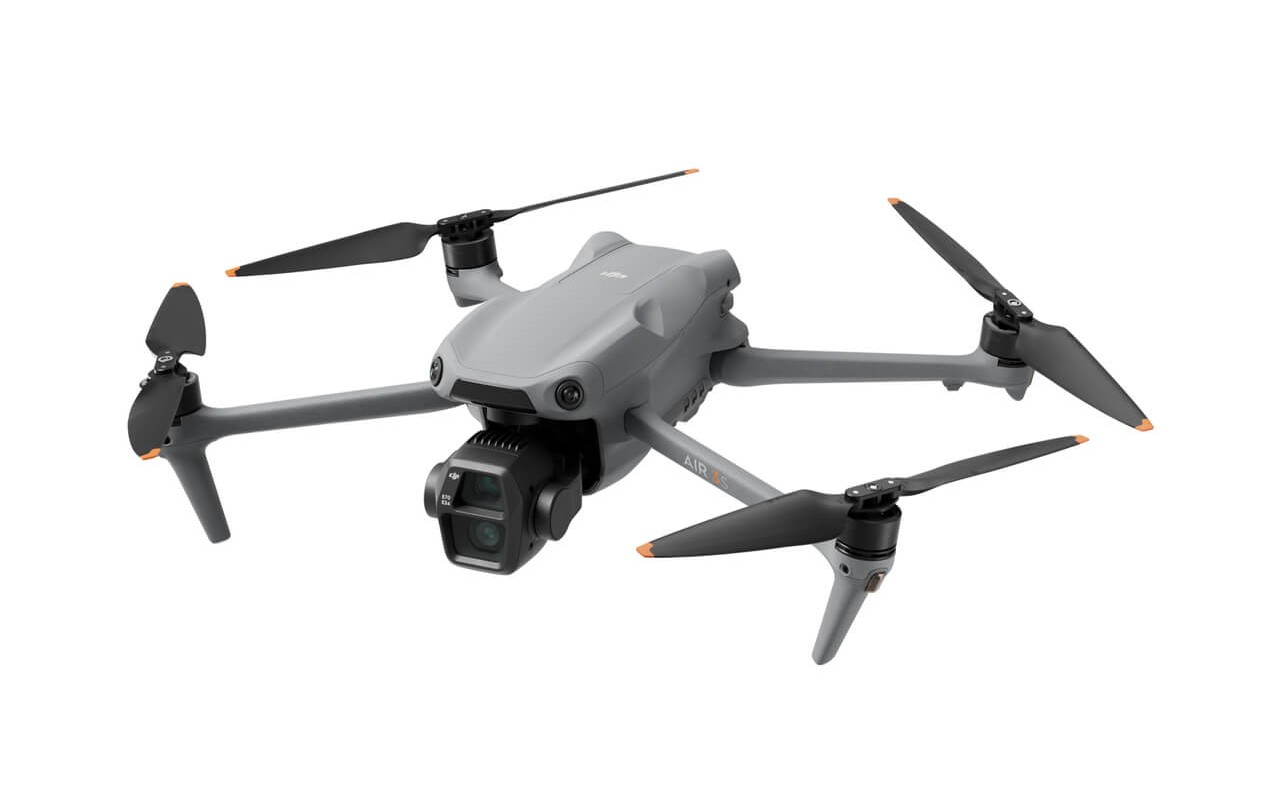
DJI Air 3S: Best Middle-Ground Option (Post-January 2026)
From approximately £1,099
The Air 3S has become a significantly more useful inspection drone since a CAA rule change in January 2026. It can now be flown in a similar regulatory context to the Mini-class drones in built-up areas, a change that opens up a lot of locations that would previously have required you to default to the Mini.
That said, I want to be honest: in some urban situations, I’ll still choose the Mini even when the Air 3S is operationally permitted, because the lighter aircraft simply represents lower risk. Regulatory permission and operational best practice aren’t always the same thing, and a good operator makes that call on a job-by-job basis.
What the Air 3S offers that the Mini doesn’t is a meaningfully better main camera (a 1-inch sensor) and a zoom camera, a combination that starts to address the core inspection problem of needing detail from a safe distance. The zoom lets you hover at a sensible height while still pulling in close-up detail of suspected problem areas without needing to push the drone uncomfortably near to the building fabric.
Who should buy it: Operators who want better image quality and zoom capability than the Mini offers but don’t need the full professional output of the Mavic 3 Pro. Also a strong choice for someone building a business who wants a drone that handles both inspection work and general aerial photography.
DJI Mavic 3 Pro: Best for Detail Work and Professional Results
From approximately £1,661
For serious commercial and industrial inspection work where image quality is non-negotiable, the Mavic 3 Pro is the best option currently available to most operators.
The headline spec is the main camera: a 4/3 CMOS Hasselblad sensor at 20MP. What this means in practice, and this is the part that matters most for inspections, is that images hold their detail when you zoom in significantly on your desktop. On the Mini 4 Pro, enlarged images quickly become soft and pixelated. On the Mavic 3 Pro, you can pull the image right into a suspected defect area and still see what you’re looking at clearly.
The 3x zoom lens takes this further. On a recent industrial roof inspection in Gloucester, there was a concern that the eaves box gutters might be rusting. This is a genuinely difficult thing to assess visually, because both rust and algae can produce similar dark, greenish-brown colouration in a gutter channel. With the Mavic’s zoom, I was able to get a highly detailed close-up shot while keeping the drone at altitude and well within VLOS, which established clearly that yes, there was rust, not just algae. That single zoom capability justified the whole job and gave the client concrete evidence to act on.
For industrial sites (factories, warehouses, agricultural buildings) there’s usually more space around the structure, fewer overhanging public areas, and more scope to fly a larger, heavier aircraft without the same level of risk calculation required in a dense residential street. This is where the Mavic 3 Pro comes into its own.
Who should buy it: Any operator doing regular commercial or industrial inspections who needs defensible, high-resolution images that clients can rely on to make decisions. If you’re producing inspection reports rather than just taking photos, this is the drone to do it properly.
What About IP-Rated Drones Like the DJI Matrice 4T?
It’s a reasonable question: if you’re inspecting roofs, can you just fly in the rain with a weatherproof drone and double your available operating days?
In practice, no. Yes, the Matrice 4T is IP-rated and can fly in wet conditions. But the lens isn’t immune to rain. Water on the lens produces blurred, unusable images, which defeats the purpose of flying in the first place. For 95% of inspection scenarios, you’re still waiting for dry conditions, and an IP-rated enterprise drone at this price point is hard to justify on that basis alone.
IP-rated drones make more sense for thermal imaging and specialist survey work where a moisture-tolerant sensor is part of a wider system. For standard visual roof inspection, the three consumer/prosumer drones above will serve you far better.
The Honest Verdict
There is no single best drone for roof inspections. What there is, is a logical hierarchy:
- Mini 4 Pro: your urban workhorse; reach for it whenever risk minimisation is the priority
- Air 3S: a capable step up for mixed-environment work, now more flexible in built-up areas than it used to be
- Mavic 3 Pro: the professional standard; what you want when image quality and detail are non-negotiable
If you’re starting out, the Mini 4 Pro gets you operational with the lowest barrier to entry and the most regulatory flexibility. If you’re serious about inspection work as a commercial service, budget for the Mavic 3 Pro. The difference in image quality is not marginal.
Whatever drone you choose, invest as much in understanding the regulations as you do in the equipment. The most capable drone in your bag is useless if you can’t legally or safely fly it at the site in front of you.
Prices correct at time of writing. Always check current pricing direct with DJI or an authorised UK reseller.
Need a Roof Inspection Carried Out Professionally?
If you’d rather leave it to a fully qualified, insured commercial drone operator, Aircam Drone carries out roof inspections across the UK. We hold a GVC with operational authorisation and carry £1m public liability insurance specific to commercial drone work.